


How to Create a Successful PPC Campaign: Unleash Growth!

To create a successful PPC campaign, follow this step-by-step guide: research keywords, create compelling ad copy, set a budget, target the right audience, and continuously optimize your campaign. By conducting thorough keyword research, you’ll be able to identify the most relevant and high-performing keywords for your ads.
Crafting compelling ad copy that highlights your unique selling points will help attract clicks and conversions. Setting a budget ensures that you have control over your spending and can allocate funds effectively. Targeting the right audience based on demographics, interests, and behaviors increases the likelihood of reaching your desired customers.
Lastly, continuous optimization involves monitoring and adjusting your campaign to improve performance over time. With these steps, you can create a successful PPC campaign that drives results.

Credit: blog.hubspot.com
Introduction To Ppc Campaigns
When it comes to digital marketing, Pay-Per-Click (PPC) advertising is a powerful tool for driving targeted traffic to your website and generating leads. In this guide, we will explore the essential steps to create a successful PPC campaign that delivers results. Let’s start by understanding the basics with an introduction to PPC campaigns.
The Power Of Pay-per-click Advertising
PPC advertising empowers businesses to reach their target audience by displaying ads on search engines and other platforms. With PPC, you only pay when someone clicks on your ad, making it a cost-effective approach to drive traffic and conversions. This form of advertising allows you to set a budget and target specific demographics, ensuring that you reach the right audience at the right time.
Key Benefits Of Implementing A Ppc Strategy
Implementing a PPC strategy offers a range of benefits for businesses. It provides instant visibility on search engines, allowing you to quickly attract potential customers. Additionally, PPC enables precise targeting, ensuring that you reach individuals who are actively searching for products or services related to your business. With the ability to track and measure your campaign performance, PPC offers valuable insights that can inform your overall marketing strategy.
Setting Clear Campaign Objectives
Setting clear campaign objectives is a crucial first step in creating a successful PPC campaign. Your objectives define the direction and purpose of your campaign, guiding your decisions and measuring your success.
Defining Your Target Audience
Identify the specific demographics, interests, and behaviors of your ideal customers to ensure your PPC ads reach the right audience. Consider factors such as age, gender, location, and online behaviors.
Establishing Measurable Goals
Set specific, achievable, and time-bound goals for your PPC campaign. These goals could include increasing website traffic, generating leads, or boosting sales. Ensure your goals are measurable so you can track and evaluate your campaign’s performance.
Keyword Research And Selection
Keyword research and selection is a crucial step in creating a successful PPC campaign. This step-by-step guide will help you choose the right keywords to optimize your campaign, increase visibility, and drive targeted traffic to your website.
Keyword research and selection is a crucial step in creating a successful PPC campaign. It involves finding the right keywords that will attract your target audience and drive relevant traffic to your website. By understanding the search terms people use, you can optimize your campaign to appear in front of the right audience at the right time.
Tools For Finding The Right Keywords
There are several tools available to help you find the right keywords for your PPC campaign. These tools provide insights into search volume, competition, and related keywords that can be invaluable in your keyword research process. Some popular tools include:
- Google Keyword Planner
- SEMrush
- Ahrefs
- SpyFu
These tools allow you to discover keywords that are relevant to your business and have a high search volume. With their help, you can uncover new keyword opportunities and refine your keyword list.
Balancing Broad And Long-tail Keywords
When selecting keywords for your PPC campaign, it’s important to strike a balance between broad and long-tail keywords. Broad keywords are more generic and have a higher search volume, but they also tend to be more competitive. On the other hand, long-tail keywords are more specific and have a lower search volume, but they often result in higher conversion rates.
By including a mix of both broad and long-tail keywords in your campaign, you can reach a wider audience while still targeting those who are more likely to convert. Broad keywords can help increase your campaign’s visibility, while long-tail keywords can attract highly targeted traffic.
Remember to regularly monitor and analyze the performance of your chosen keywords. This will help you identify which keywords are driving the most traffic and conversions, allowing you to optimize your campaign accordingly.
Crafting Compelling Ad Copy
Craft compelling ad copy for your PPC campaign by focusing on benefits, using strong calls to action, and highlighting unique selling points. Keep it concise and relevant, and make sure to test and refine your ad copy for optimal results.
Ad Copy
Crafting compelling ad copy is crucial for the success of your PPC campaign. A well-written ad can grab attention, engage your audience, and ultimately drive conversions. In this step-by-step guide, we will explore how to write headlines that grab attention and create descriptions that convert. Let’s dive in!
Writing Headlines That Grab Attention
The headline is the first thing that users see when they come across your ad. It needs to be catchy, captivating, and relevant to the user’s search query. Here are some tips to help you write headlines that grab attention:
1. Keep it concise: Use no more than 12 words in your headline to ensure it is easily readable and impactful.
2. Highlight key benefits: Focus on the unique selling points of your product or service. Use bold to emphasize important keywords and phrases.
3. Use action-oriented language: Encourage users to take action by using strong verbs like “discover,” “unlock,” or “get.”
4. Include numbers or statistics: Numbers attract attention and add credibility to your ad. For example, “Save 50% on all orders” or “Over 1 million satisfied customers.”
Creating Descriptions That Convert
After capturing the user’s attention with a compelling headline, it’s essential to provide a description that convinces them to click on your ad. Here’s how to create descriptions that convert:
1. Address customer pain points: Identify the problems your target audience is facing and offer a solution in your description. Show empathy and understanding.
2. Highlight unique selling propositions: What sets your product or service apart from the competition? Use bullet points or a table to present this information clearly.
3. Include a call-to-action: Tell users what action you want them to take. Whether it’s “Shop Now,” “Sign Up Today,” or “Learn More,” a clear call-to-action can increase click-through rates.
4. Test and optimize: Don’t settle for the first description you write. Test different variations and analyze the results to see which one performs best. Make data-driven decisions.
Crafting compelling ad copy is an art that requires a deep understanding of your target audience and the ability to communicate your value proposition effectively. By following these steps and continuously refining your ad copy, you can create PPC campaigns that drive results and achieve your marketing goals.
Designing An Effective Landing Page
Creating an effective landing page is crucial for a successful PPC campaign. To achieve this, ensure that your page has a clear call-to-action, compelling headlines, relevant content, and is optimized for mobile devices. Additionally, make sure to test and analyze your landing page to continually improve its performance.
Designing an Effective Landing Page is crucial for the success of your PPC campaign. Your landing page is where potential customers will land after clicking on your ad, so it needs to be optimized for conversion. Here are the essential elements to include in your landing page to convert visitors into customers:
Elements Of A High-converting Landing Page
Your landing page should have a clear and concise headline that matches the ad’s message, followed by a subheading that elaborates on the offer. Include a visually appealing hero image or video that highlights your product or service. Use bullet points to present the benefits of your offer in an easy-to-read format.
Optimizing For User Experience
Ensure your landing page is user-friendly and easy to navigate. Use a simple layout with clear and concise copy that emphasizes the benefits of your offer. Use contrasting colors and a clear call-to-action (CTA) button that stands out. Make sure your landing page is optimized for mobile devices, as many visitors will access it on their smartphones.
To further optimize your landing page for user experience, ensure that it loads quickly. Use compressed images and minify your code to reduce load times. Also, remove any distractions such as navigation menus or external links that may lead visitors away from your CTA.
In conclusion, designing an effective landing page is crucial to the success of your PPC campaign. By including essential elements and optimizing for user experience, you can increase your conversion rates and achieve your marketing goals.
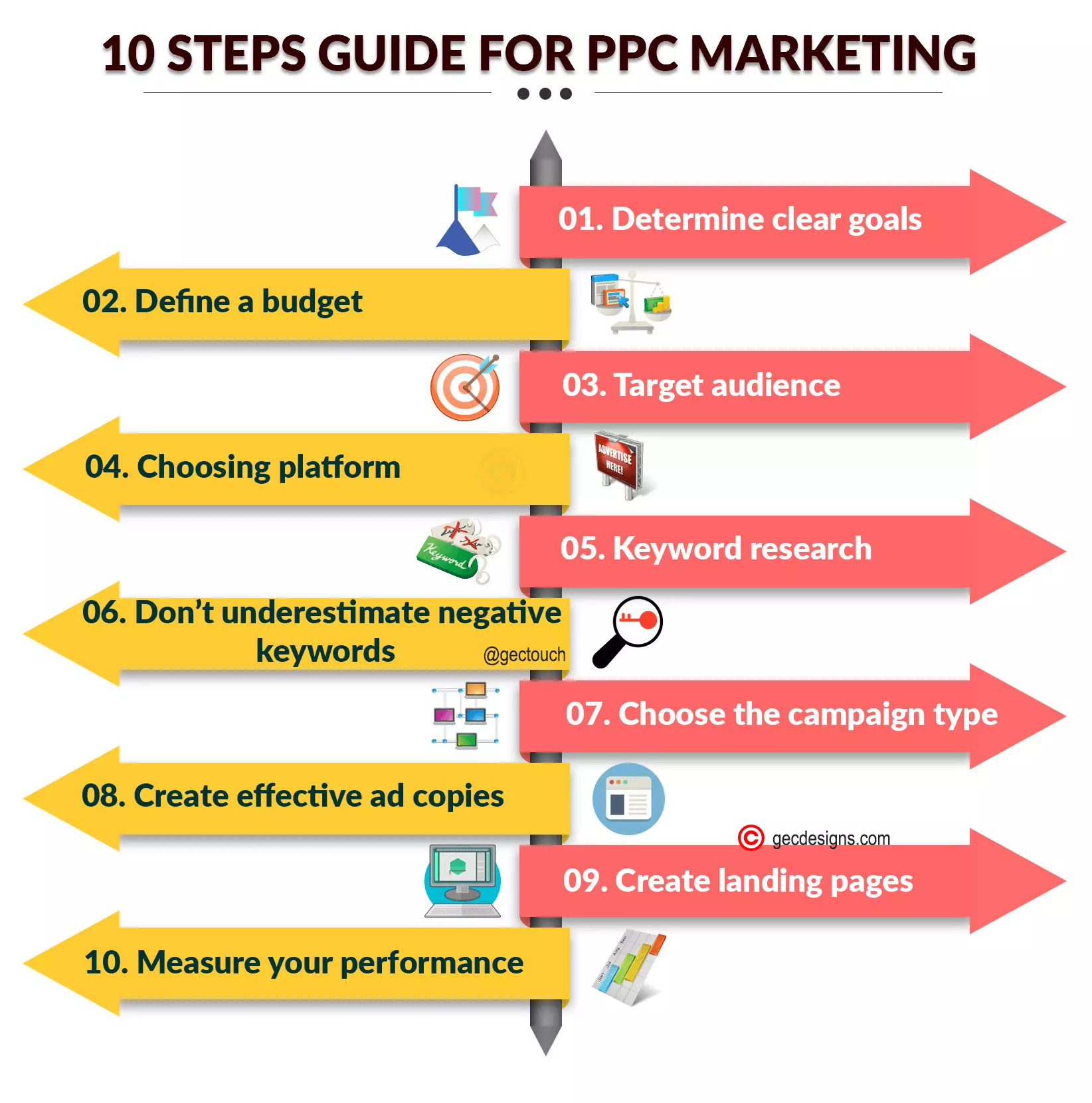
Credit: gecdesigns.com
Bidding Strategies And Budget Management
Optimizing bidding strategies and managing your budget are crucial steps in creating a successful PPC campaign. By carefully selecting the right bidding options and effectively allocating your budget, you can maximize the impact of your ads and drive valuable traffic to your website.
Understanding the intricacies of bidding and budget management is key to achieving your campaign goals.
Bidding Strategies and Budget Management are crucial components of any successful PPC campaign. Understanding different bidding options and allocating budgets for optimal ROI are key to achieving your campaign goals. Let’s dive into each of these subtopics in more detail.
Understanding Different Bidding Options
There are several bidding options available in PPC campaigns. Choosing the right one can help you achieve your campaign goals while staying within your budget. Here are some bidding strategies you can consider:
- Manual CPC bidding: This bidding option allows you to set the maximum amount you’re willing to pay for a click on your ad. It gives you full control over your bids and allows you to adjust them based on performance.
- Automated bidding: This bidding option uses machine learning to adjust your bids automatically based on your campaign goals. It can save you time and optimize your bids for maximum ROI.
- Enhanced CPC bidding: This bidding option lets you adjust your manual bids based on the likelihood of a conversion. It can help you get more conversions while staying within your budget.
Allocating Budget For Optimal Roi
Allocating your budget effectively can help you achieve optimal ROI for your PPC campaign. Here are some tips to help you allocate your budget:
- Set your campaign goals: Determine what you want to achieve with your campaign and set realistic goals. This will help you allocate your budget effectively.
- Track your conversions: Use conversion tracking to monitor the performance of your ads. This will help you adjust your budget based on what’s working and what’s not.
- Focus on high-performing keywords: Allocate more budget to keywords that are driving conversions and adjust your bids accordingly.
- Monitor your competition: Keep an eye on what your competitors are doing and adjust your budget accordingly.
In conclusion, understanding different bidding options and allocating budgets for optimal ROI are crucial for creating a successful PPC campaign. By implementing these strategies, you can achieve your campaign goals while staying within your budget.
Monitoring And Adjusting Campaigns
Monitoring and adjusting your PPC campaigns is a crucial step in ensuring their success. By regularly analyzing key metrics and knowing when to pivot your strategy, you can optimize your campaigns to drive better results and maximize your return on investment. In this section, we will explore how to effectively monitor and adjust your PPC campaigns for optimal performance.
Analyzing PPC Metrics For Success
Analyzing PPC metrics is essential to gauge the effectiveness of your campaigns. By understanding the data, you can make informed decisions to improve your campaign performance. Here are some key metrics to focus on:
| Metric | Description |
|---|---|
| Click-Through Rate (CTR) | The percentage of users who click on your ad after seeing it. |
| Conversion Rate | The percentage of users who take the desired action on your website. |
| Cost Per Click (CPC) | The average amount you pay for each click on your ad. |
| Return on Ad Spend (ROAS) | The revenue generated for every dollar spent on advertising. |
Regularly monitoring these metrics will provide valuable insights into the performance of your PPC campaigns. If you notice low CTR or conversion rates, it may indicate that your ad copy or landing page needs improvement. On the other hand, a high CPC with low ROAS could suggest that you need to optimize your targeting or adjust your bidding strategy.
When To Pivot Your Strategy
Knowing when to pivot your PPC strategy is crucial to adapt to changing market conditions and maximize your campaign’s effectiveness. Here are some indicators that may signal the need for a strategy adjustment:
- Declining performance metrics over an extended period
- Increase in competition or changes in industry trends
- Significant changes in your target audience’s behavior
When these indicators arise, it’s important to reassess your campaign goals, target keywords, ad copy, and bidding strategy. By making data-driven adjustments, you can ensure your campaigns remain relevant and effective.
Remember, monitoring and adjusting your PPC campaigns is an ongoing process. Regularly reviewing metrics and pivoting your strategy when necessary will help you stay ahead of the competition and achieve your desired results.
A/b Testing For Campaign Improvement
To improve the success of your PPC campaign, consider implementing A/B testing. This method involves creating two versions of an ad and comparing their performance to determine the most effective approach. By continuously testing and refining your campaigns, you can optimize your advertising efforts and maximize your return on investment.
The Importance Of Testing Ads
A/B testing is a crucial step in creating a successful PPC campaign. By systematically comparing two versions of an ad, you can gather valuable data and insights to optimize your campaign performance. Testing ads allows you to identify which elements resonate best with your target audience, leading to higher click-through rates (CTR), improved conversion rates, and ultimately, a better return on investment (ROI).
When it comes to testing ads, it’s important to focus on one variable at a time. This could be the headline, ad copy, call-to-action, or even the visuals. By isolating and comparing these variables, you can determine which version performs better and make data-driven decisions to refine your campaign.
Interpreting A/b Test Results
Interpreting A/B test results requires a keen eye for detail and a clear understanding of the key metrics. Here are some important factors to consider when analyzing your test results:
- Click-through Rate (CTR): The percentage of people who click on your ad after seeing it. A higher CTR indicates that your ad is more engaging and appealing to your audience.
- Conversion Rate: The percentage of visitors who complete a desired action, such as making a purchase or filling out a form. A higher conversion rate indicates that your ad is effectively driving actions.
- Cost per Click (CPC): The amount you pay for each click on your ad. Lower CPC means you’re getting more clicks for your budget.
- Return on Investment (ROI): The measure of profitability from your PPC campaign. A positive ROI indicates that your campaign is generating more revenue than the cost of running it.
When analyzing the results, compare the performance of the different ad versions based on these metrics. Look for patterns or trends that indicate which elements are driving better results. It’s important to give your A/B test enough time to gather sufficient data before drawing conclusions.
Based on the insights gained from your A/B test, make data-driven decisions to refine your campaign. Implement the winning ad version and continue testing other variables to further optimize your PPC campaign. Remember, continuous testing and optimization are key to creating a successful PPC campaign that delivers impactful results.
Leveraging Ad Extensions
When it comes to creating a successful PPC campaign, leveraging ad extensions can significantly enhance the performance and visibility of your ads. Ad extensions provide additional information and ways for potential customers to engage with your ad, ultimately increasing the chances of driving valuable clicks and conversions.
Types Of Ad Extensions To Consider
There are several types of ad extensions that you can consider incorporating into your PPC campaign to maximize the impact of your ads. These include:
- Sitelink Extensions
- Callout Extensions
- Structured Snippet Extensions
- Call Extensions
- Location Extensions
- Price Extensions
- App Extensions
Best Practices For Ad Extension Use
When utilizing ad extensions, it is essential to follow best practices to ensure that they effectively complement your ads and contribute to the overall success of your PPC campaign. Here are some best practices to keep in mind:
- Ensure Relevance: Ad extensions should be relevant to the ad and provide additional value to the user.
- Utilize Multiple Extensions: Incorporate multiple ad extensions to maximize visibility and provide diverse information.
- Regular Updates: Regularly update and review the performance of your ad extensions to ensure they remain effective.
- Utilize Call-to-Actions: Include strong call-to-actions within your ad extensions to encourage user engagement.
- Mobile Optimization: Optimize ad extensions for mobile devices to cater to a wider audience.
Navigating Ad Compliance And Restrictions
When it comes to running a successful PPC campaign, navigating ad compliance and restrictions is crucial to ensuring that your ads are displayed to the right audience and in compliance with advertising guidelines. Understanding and adhering to these regulations can help you avoid disapprovals and appeals, ultimately leading to a more effective campaign.
Staying Within Advertising Guidelines
Adhering to advertising guidelines is essential for the success of your PPC campaign. Ensure that your ad content and targeting comply with the policies set by the advertising platform. By staying within these guidelines, you can improve the chances of your ads being approved and reaching your target audience effectively.
Dealing With Disapprovals And Appeals
Disapprovals can happen due to various reasons such as policy violations or inaccuracies in ad content. When faced with disapproval, it’s important to thoroughly review the reasons provided by the platform and make necessary adjustments to comply with the guidelines. If you believe that the disapproval was made in error, you can submit an appeal with a clear explanation and supporting evidence to request a review of the decision.
Integrating PPC with Other Marketing Efforts
Integrating PPC with other marketing efforts is crucial for creating a successful PPC campaign. This step-by-step guide will provide you with the necessary strategies to optimize your PPC campaigns and align them with your overall marketing objectives.
Combining SEO and PPC for Synergy
Integrating PPC with other marketing efforts can help you maximize your campaign’s potential. One effective strategy is to combine PPC with Search Engine Optimization (SEO). By using both techniques, you can increase your online visibility and drive more traffic to your website.
To integrate PPC and SEO, start by identifying the keywords that are most relevant to your business. Use these keywords in your PPC ads and landing pages, as well as in your website’s content and meta tags.
Another way to combine PPC and SEO is by using PPC to test the effectiveness of your keywords. By running a PPC campaign, you can quickly determine which keywords are generating the most clicks and conversions. You can then use this information to optimize your SEO strategy and improve your website’s organic search rankings.
Cross-channel Marketing Strategies
Integrating PPC with other marketing channels can also help you reach a wider audience and increase your campaign’s effectiveness. Cross-channel marketing involves using multiple channels to engage with your target audience and create a cohesive brand experience.
One effective cross-channel marketing strategy is to use PPC ads to drive traffic to your social media pages. By promoting your social media accounts in your PPC ads, you can increase your followers and engagement on these platforms. This, in turn, can help you build a stronger brand and increase customer loyalty.
Another cross-channel marketing strategy is to use PPC ads to promote your email newsletter. By offering an incentive, such as a discount or free resource, you can encourage people to sign up for your newsletter. Once they have subscribed, you can use email marketing to nurture these leads and drive conversions.
In conclusion, integrating PPC with other marketing efforts can help you create a more effective and cohesive campaign. By combining PPC with SEO and other channels, you can increase your online visibility, drive more traffic to your website, and reach a wider audience.

Credit: www.mayple.com
Future Trends In PPC Advertising
Emerging Technologies In PPC
As technology continues to advance, the landscape of PPC advertising is also evolving. Artificial intelligence and machine learning are playing a significant role in automating the optimization process of PPC campaigns, allowing for more efficient targeting and bidding strategies.
Predictions For The Ppc Landscape
The future of PPC advertising is expected to see an increase in voice search optimization, as the use of virtual assistants and smart speakers becomes more prevalent. Additionally, the rise of visual search is anticipated to impact PPC, as platforms integrate visual recognition technology for advertising purposes.
Conclusion: Maximizing Growth With Ppc
Maximize growth with a successful PPC campaign by following this step-by-step guide. Learn how to create a targeted and effective campaign that drives results, without relying on overused phrases or repetitive terms. With careful planning and execution, you can achieve your growth goals through PPC advertising.
Key Takeaways From A Successful PPC Campaign
A successful PPC campaign can be a game-changer for your business, helping you maximize growth and reach new heights. Here are some key takeaways to keep in mind:
- Keyword Research: Conduct thorough keyword research to identify relevant and high-performing keywords that will attract your target audience.
- Compelling Ad Copy: Craft compelling and persuasive ad copy that grabs attention, highlights your unique selling points, and entices users to click.
- Optimized Landing Pages: Create optimized landing pages that align with your ad messaging, provide relevant information, and encourage conversions.
- Continuous Monitoring: Monitor your PPC campaign regularly to track performance, identify areas for improvement, and make data-driven optimizations.
- Budget Management: Set a realistic budget and allocate funds strategically to ensure maximum ROI from your PPC campaign.
- A/B Testing: Experiment with different ad variations, landing page layouts, and targeting options through A/B testing to discover what works best for your audience.
Next Steps After Campaign Execution
Once your PPC campaign has been executed, there are several important next steps to take in order to maintain and further enhance your success:
- Analyze Results: Analyze the data and performance metrics from your campaign to gain insights into what worked well and what areas need improvement.
- Refine Targeting: Refine your targeting strategy based on the data collected, focusing on the demographics, locations, and devices that are generating the highest conversions.
- Optimize for Conversions: Continuously optimize your landing pages and conversion funnels to improve the user experience and increase conversion rates.
- Stay Competitive: Keep a close eye on your competitors’ PPC campaigns, staying updated on industry trends and adjusting your strategies accordingly.
- Expand Campaigns: Consider expanding your PPC campaigns to other platforms or targeting new keywords to tap into additional opportunities for growth.
By following these next steps, you can ensure that your PPC campaign continues to deliver results and drives ongoing growth for your business.
Frequently Asked Questions
How To Create A Successful PPC Campaign?
To create a successful PPC campaign, follow these guidelines: 1. Define your target audience and set clear goals. 2. Conduct thorough keyword research and craft compelling ad copy. 3. Set a realistic budget and bid strategy. 4. Continuously monitor and optimize your campaign for the best results.
5. Test and experiment with different approaches to improve performance.
How Do You Structure A PPC Campaign?
To structure a PPC campaign, follow these steps: 1. Set clear goals and objectives 2. Conduct keyword research and group them into ad groups 3. Write compelling ad copy with relevant keywords 4. Create landing pages that align with the ad copy 5. Continuously monitor and optimize the campaign for better performance.
What Are The Stages Of Creating A Ppc Campaign?
The stages of creating a PPC campaign include: 1. Setting goals and defining the target audience. 2. Conducting keyword research to identify relevant keywords for the campaign. 3. Creating compelling ad copy and designing visually appealing landing pages. 4. Setting up the campaign in the chosen advertising platform and selecting targeting options.
5. Monitoring the campaign’s performance, making adjustments as needed, and analyzing the results to optimize the campaign.
What Are The 5 Key Aspects Of PPC?
The 5 key aspects of PPC include keyword research, ad copywriting, landing page optimization, bid management, and performance tracking. These aspects are crucial for running successful pay-per-click campaigns.
Conclusion
Creating a successful PPC campaign requires careful planning and execution. By following the step-by-step guide outlined in this blog post, you can optimize your campaign for maximum effectiveness. Remember to continuously monitor and adjust your strategy to achieve the best results.
With dedication and attention to detail, you can drive valuable traffic and conversions to your website.