



How to Use Content Marketing to Boost Your Expert Status
To use content marketing for establishing thought leadership, create and distribute high-quality, valuable content that positions you as an

To use content marketing for establishing thought leadership, create and distribute high-quality, valuable content that positions you as an expert in your industry. This can be achieved by consistently producing informative blog posts, articles, videos, and social media content that offer unique insights and solutions to your target audience’s pain points.
Engage with your audience through interactive discussions, webinars, and live events to further establish your expertise and build trust. By showcasing your knowledge and providing valuable information, you can effectively position yourself as a thought leader and gain credibility within your industry.
In today’s highly competitive business landscape, establishing thought leadership is essential for gaining a competitive edge and building trust with your audience. By positioning yourself as an expert in your field, you not only differentiate yourself from competitors but also attract potential customers who are seeking authoritative voices and valuable insights. One powerful strategy to achieve this is through content marketing. By consistently creating and distributing high-quality, valuable content, you can establish yourself as a thought leader and gain credibility within your industry. In this blog post, we will explore how to effectively use content marketing to establish thought leadership and provide actionable tips to help you get started. So let’s dive in and discover how you can become a trusted authority in your field through content marketing.

Credit: contentmarketinginstitute.com
Introduction To Expert Status Through Content Marketing
Establishing thought leadership through content marketing is a powerful strategy to position yourself as an expert in your field. By consistently creating valuable, informative, and engaging content, you can build trust and credibility with your audience, ultimately leading to increased visibility, authority, and opportunities.
Establishing thought leadership and expert status is crucial for gaining trust and credibility in today’s competitive digital landscape. Through content marketing, businesses have the opportunity to showcase their expertise and position themselves as industry leaders. This blog post will explore the importance of establishing expertise and how content marketing plays a significant role in building credibility.
Importance Of Establishing Expertise
To stand out in your industry and gain the trust of your target audience, it is essential to establish yourself as an expert. When you are seen as an authority, people are more likely to seek your advice, trust your recommendations, and choose your products or services. Establishing expertise also opens up opportunities for partnerships, collaborations, and speaking engagements, further expanding your reach and influence.
By positioning yourself as an expert, you differentiate yourself from competitors and gain a competitive advantage. It allows you to become the go-to resource for industry-related information, attracting a loyal following and increasing brand recognition.
Content Marketing’s Role In Building Credibility
Content marketing plays a crucial role in building credibility and establishing expert status. By consistently creating and sharing valuable content, you showcase your knowledge, expertise, and insights to your target audience.
One way to demonstrate expertise through content marketing is by publishing informative blog posts, articles, or whitepapers that address industry-specific topics. By providing valuable and actionable information, you position yourself as a trusted source of knowledge and build credibility with your audience.
Another effective content marketing strategy is creating educational videos or hosting webinars where you can share your expertise through visual and interactive formats. These mediums allow you to engage with your audience directly, establish a personal connection, and reinforce your expert status.
Additionally, leveraging social media platforms to share your content and engage in conversations with your audience helps to establish thought leadership. By actively participating in industry-related discussions and providing valuable insights, you gain visibility, attract followers, and build credibility as an expert in your field.
In conclusion, content marketing provides a powerful platform for establishing thought leadership and expert status. By consistently creating and sharing valuable content, you can position yourself as an authority in your industry, gain trust and credibility, and ultimately drive business growth.
Identifying Your Niche
Establishing thought leadership through content marketing begins with identifying your niche. By understanding your audience’s needs and interests, you can create valuable and insightful content that positions you as an authority in your field. This involves conducting thorough research and leveraging your expertise to provide unique perspectives and valuable insights.
Pinpointing Your Area Of Expertise
Identifying your niche is the crucial first step in establishing thought leadership through content marketing. Your area of expertise should be clearly defined to effectively resonate with your audience. By pinpointing your niche, you can position yourself as an authority in a specific subject area, boosting credibility and trust among your audience.
Start by evaluating your unique strengths, passions, and experiences. Consider what sets you apart from others in your field and how you can provide valuable insights. Embrace your expertise and use it as the foundation for your thought leadership content strategy.
Researching Your Target Audience
Understanding your target audience is essential for creating content that resonates with them. Thorough research allows you to tailor your content to address the specific needs, challenges, and interests of your audience. By gaining insights into their preferences and pain points, you can craft content that engages and adds value to their lives.
Utilize analytics tools, surveys, and social listening to gather data about your audience. Dive deep into demographics, psychographics, and behavioral patterns to create targeted content that establishes you as a trusted source within your niche.
Crafting A Content Strategy
Crafting a content strategy that focuses on content marketing can help establish thought leadership. By creating valuable and insightful content, businesses can showcase their expertise, build trust with their audience, and position themselves as industry leaders. This can be achieved through informative blog posts, whitepapers, case studies, and engaging social media content.
Setting Clear Content Objectives
When it comes to crafting a content strategy for establishing thought leadership, it’s crucial to start by setting clear content objectives. These objectives will guide the creation and distribution of content that resonates with your target audience and establishes your authority in your industry.
Through setting clear content objectives, you can ensure that every piece of content you produce serves a specific purpose, whether it’s to educate, inspire, or engage your audience. This approach helps in maintaining consistency and relevance, which are vital in building thought leadership.
Choosing The Right Content Platforms
Choosing the right content platforms is an essential aspect of crafting a content strategy for thought leadership. By selecting the most suitable platforms, you can effectively reach and engage your audience while showcasing your expertise in your field.
Moreover, it’s crucial to consider the preferences and behaviors of your target audience to determine the most effective platforms for distributing your content. Whether it’s through blogging, social media, podcasts, or video channels, the right platforms can amplify your thought leadership efforts.

Credit: ermarketing.net
Creating High-quality Content
Establishing thought leadership through content marketing involves creating high-quality content that showcases your expertise, insights, and unique perspective. By providing valuable information and engaging with your audience, you can position yourself as an industry leader, gaining trust and credibility in the process.
This helps to build a loyal following and attract new opportunities for growth.
Creating High-Quality Content is the foundation of establishing thought leadership through content marketing. Valuable content can help you gain the trust and respect of your audience, and position yourself as an authority in your field. In order to create high-quality content, you need to focus on the elements that make it valuable and maintain consistency in your content.
Elements of Valuable Content
There are several elements that make content valuable, and incorporating them into your content can help you establish thought leadership. These elements include:
– Relevance: Your content should be relevant to your target audience and address their pain points or interests. This will help your audience see the value in your content and keep them engaged.
– Originality: Creating original content that provides unique insights or perspectives can help set you apart from your competitors and establish your authority in your field.
– Accuracy: Your content should be factually accurate and supported by credible sources. This will help build trust with your audience and establish you as a reliable source of information.
– Actionability: Providing actionable advice or tips in your content can help your audience apply your insights to their own lives or businesses, making your content more valuable to them.
## Maintaining Consistency and Quality
Maintaining consistency and quality in your content is crucial to establishing thought leadership. This means adhering to a consistent tone and style, as well as ensuring that each piece of content meets a high standard of quality. Here are some tips for maintaining consistency and quality:
– Establishing guidelines: Developing guidelines for your content can help ensure consistency in tone and style across your content.
– Editing and proofreading: Editing and proofreading your content can help catch errors and ensure that your content meets a high standard of quality.
– Using a content calendar: Planning your content in advance and using a content calendar can help ensure that you are consistently publishing high-quality content.
By focusing on creating high-quality content and maintaining consistency and quality, you can establish yourself as a thought leader in your field and build a loyal audience.
Leveraging Different Content Formats
To establish thought leadership through content marketing, it’s important to leverage different formats such as blog posts, videos, podcasts, and infographics. By providing valuable insights and expertise through various channels, you can showcase your knowledge and position yourself as an industry leader.
Blogs And Articles
One of the most popular and effective ways to establish thought leadership through content marketing is by leveraging blogs and articles. These written formats allow you to share your expertise, insights, and industry knowledge with your audience in a clear and concise manner. By consistently producing high-quality blog posts and articles, you can position yourself as a trusted authority in your field.
When creating blog posts and articles, it’s important to focus on providing valuable information that addresses your audience’s pain points and solves their problems. Use a conversational tone and break down complex concepts into easy-to-understand language. Consider incorporating keywords related to your industry to improve your search engine optimization (SEO) and attract organic traffic to your website.
In addition, make sure your blog posts and articles are visually appealing by using relevant images, bullet points, and subheadings to enhance readability. Including internal and external links to reputable sources can also add credibility to your content.
Videos And Podcasts
In today’s fast-paced digital world, videos and podcasts have gained immense popularity as content formats. They provide a dynamic and engaging way to share your knowledge and expertise while connecting with your audience on a more personal level.
Creating informative and visually appealing videos allows you to demonstrate your expertise through visual demonstrations, presentations, or interviews. You can upload these videos on platforms like YouTube or embed them on your website or blog. Remember to optimize your video titles, descriptions, and tags with relevant keywords for better discoverability.
Similarly, podcasts offer a convenient way for your audience to consume content while on the go. By hosting podcast episodes where you discuss industry trends, share insights, or interview industry experts, you can establish yourself as a thought leader in your niche. Ensure your podcasts are well-structured, professionally edited, and optimized with relevant keywords in their titles and descriptions.
Infographics And Whitepapers
Infographics and whitepapers are powerful content formats that allow you to present complex information in a visually appealing and easily digestible manner. Its combine text and visuals to convey information concisely, making them highly shareable on social media platforms.
When creating infographics, focus on presenting data, statistics, or step-by-step processes in a visually appealing way. Use colors, icons, and graphs to make your information more engaging and easy to understand. Don’t forget to include your branding elements such as your logo and website URL to increase brand visibility.
On the other hand, whitepapers are in-depth reports or guides that explore a particular topic or issue. They provide a comprehensive analysis of a subject and are often used to showcase thought leadership. When creating whitepapers, conduct thorough research, provide valuable insights, and support your claims with credible sources.
Remember to optimize your infographics and whitepapers with relevant keywords in their titles, descriptions, and alt text for improved SEO.
Using Seo To Increase Visibility
Keyword Research For Experts
Effective keyword research is crucial for thought leadership. Utilize tools like Google Keyword Planner for in-depth analysis.
On-page And Off-page Seo Tactics
- Optimize meta titles and descriptions for each page.
- Create quality content with relevant keywords.
- Build backlinks from authoritative sites.
Engaging With Your Audience
Establishing thought leadership through content marketing involves creating engaging material that resonates with your audience. By crafting insightful articles, videos, and infographics, you can position yourself as an authority in your industry and build a loyal following. Engage with your audience through meaningful interactions and discussions to further solidify your position as a trusted source of valuable information.
Building A Community Around Your Content
Engaging with your audience is crucial for establishing thought leadership. Creating a community around your content fosters connection and trust.
Interacting Through Comments And Social Media
Respond promptly to comments and messages on social media platforms. Encourage discussions and feedback to deepen engagement.
Measuring Success And Adjusting Tactics
Establishing thought leadership through content marketing requires measuring success and adjusting tactics. By analyzing key metrics such as engagement, website traffic, and conversions, businesses can identify what works and make necessary adjustments to further enhance their thought leadership position. This data-driven approach allows for continuous improvement and ensures that content strategies align with audience needs and preferences.
Analytics provide insights for refining content strategies. It is crucial to constantly measure performance metrics to gauge success.
Analyzing Content Performance Metrics
Utilize tools like Google Analytics to monitor traffic sources and user behavior. Track engagement metrics like click-through rates and time spent on the page.
Refining Your Strategy Over Time
Review data regularly and adjust your approach accordingly. Stay agile and responsive to audience preferences.
Collaborating With Other Experts
Guest Posting And Co-creation Opportunities
Connect with industry leaders to collaborate on guest posts and co-create valuable content.
- Share insights and knowledge through guest posts.
- Collaborate on webinars and e-books for added value.
- Utilize their expertise to enhance your content.
Networking And Partnerships
Build relationships with influencers through networking and establish mutually beneficial partnerships.
- Attend industry events to connect with key figures.
- Engage with influencers on social media platforms.
- Explore partnership opportunities for co-branded content.
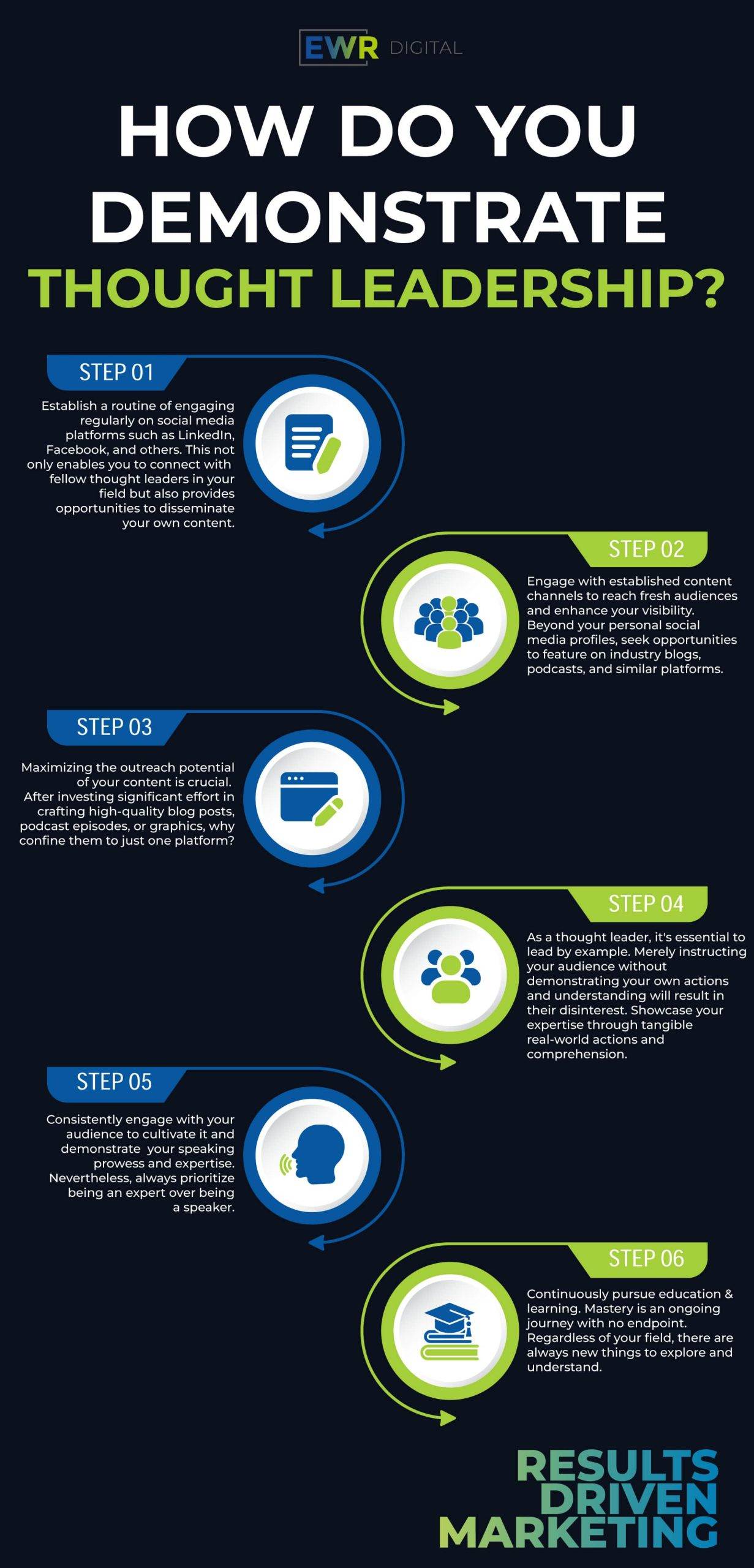
Credit: www.ewrdigital.com
Staying Updated And Relevant
Stay ahead of the game and establish yourself as a thought leader by leveraging content marketing. Keep your content fresh, relevant, and informative to establish credibility and attract your target audience. Stand out from the competition by consistently delivering valuable insights and positioning yourself as an expert in your industry.
Keeping Up With Industry Trends
To establish thought leadership through content marketing, it is essential to stay updated and relevant in your industry. This means keeping a finger on the pulse of the latest trends, insights, and developments. By staying informed, you can position yourself as a knowledgeable and trusted authority in your field. Here are a few strategies to help you stay updated:
Follow industry publications and blogs:
Stay informed by regularly reading industry-specific publications and blogs. These platforms often provide valuable insights, analysis, and updates on emerging trends. By staying up to date with the latest information, you can create content that addresses current industry challenges and developments.
Engage in professional networks and communities:
Joining professional networks and communities related to your industry allows you to connect with like-minded individuals and experts. Participate in discussions, ask questions, and share your own knowledge. By engaging in these communities, you can gain valuable insights and perspectives that can inform your content strategy.
Attend conferences and webinars:
Conferences and webinars provide opportunities to learn from industry leaders and experts. These events often feature keynote speeches, panel discussions, and workshops that delve into the latest trends and best practices. Attending these events can help you gather valuable information and network with other professionals.
Monitor social media:
Social media platforms are excellent sources for staying updated on industry trends. Follow relevant hashtags, industry influencers, and thought leaders on platforms like Twitter, LinkedIn, and Facebook. By monitoring social media conversations, you can identify emerging trends, and topics of interest, and engage with your target audience.
Subscribe to industry newsletters:
Many industry organizations and publications offer newsletters that deliver curated content straight to your inbox. By subscribing to these newsletters, you can receive updates, insights, and valuable resources directly from trusted sources. These newsletters can be a time-efficient way to stay informed without having to actively seek out information.
Continual Learning And Personal Growth
To establish thought leadership, it’s important to prioritize continual learning and personal growth. This mindset allows you to expand your knowledge, skills, and expertise, making you a valuable resource for your audience. Here are a few strategies to ensure continual learning and personal growth:
Read books and industry publications:
Books and industry publications are treasure troves of knowledge. Make it a habit to read regularly, focusing on both industry-specific books and broader topics that can enhance your overall understanding. Reading can expose you to new ideas, perspectives, and strategies that you can apply to your content marketing efforts.
Take online courses and certifications:
The internet offers a wealth of online courses and certifications that can help you deepen your expertise. Look for courses that cover topics directly related to your industry or areas that can complement your existing skills. Completing these courses not only enhances your knowledge but also demonstrates your commitment to growth and improvement.
Attend workshops and seminars:
Workshops and seminars provide opportunities for hands-on learning and skill development. Look for relevant events in your industry or related fields and attend them to expand your knowledge and network with other professionals. These events often offer practical insights and actionable strategies that you can implement in your content marketing efforts.
Network with other professionals:
Building relationships with other professionals in your field can open doors to new opportunities for learning and growth. Attend industry events, join professional organizations, and connect with like-minded individuals on platforms like LinkedIn. Engage in meaningful conversations, share insights, and collaborate on projects to expand your knowledge and network.
Reflect and evaluate:
Take time to reflect on your content marketing efforts regularly. Evaluate what has worked well, what can be improved, and what new strategies or approaches you can experiment with. This self-reflection allows you to identify areas for growth and ensures that you are continually evolving as a thought leader.
Frequently Asked Questions
How Can Content Marketing Make Me Into An Industry Thought Leader?
Content marketing can establish you as a thought leader by showcasing your expertise. Consistent, valuable content builds credibility and authority within your industry. Engaging with your audience and providing unique insights can elevate your reputation and position you as a go-to resource.
What Is Thought Leadership Content Marketing?
Thought leadership content marketing is a strategy where a brand positions itself as an expert in its industry by creating and sharing valuable and insightful content. This content is designed to educate, inform and engage the audience, rather than promote the brand’s products or services.
By establishing thought leadership, a brand can build trust and credibility with its audience, leading to increased brand awareness and customer loyalty.
How Do You Create A Thought Leadership Content Strategy?
To create a thought leadership content strategy, follow these guidelines: 1. Identify your target audience and their needs. 2. Research industry trends and hot topics. 3. Develop unique and insightful content ideas. 4. Create a content calendar and schedule regular posts.
5. Promote your content through social media and other channels.
How To Use Social Media To Build Thought Leadership?
To build thought leadership using social media, create and share valuable content, engage with your audience, and participate in industry conversations. Utilize hashtags, join relevant groups, and collaborate with influencers to amplify your reach and establish credibility. Consistency and authenticity are key to building a strong presence.
Conclusion
Content marketing is a powerful tool for establishing thought leadership. By consistently providing valuable, insightful content, you can position yourself as an authority in your industry. This can lead to increased trust, credibility, and visibility, ultimately driving business growth and success.
Embrace content marketing as a means to showcase your expertise and influence.