


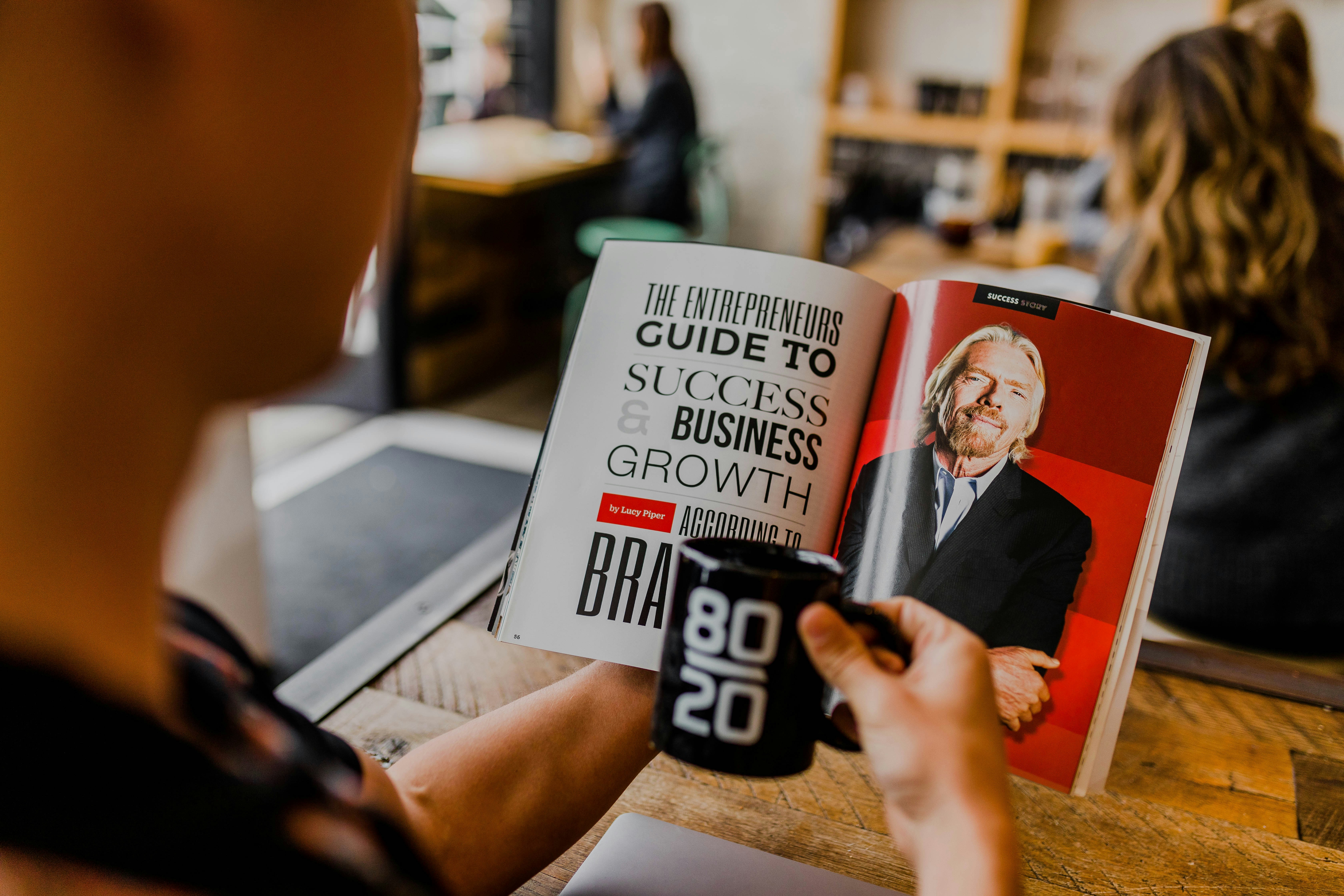
The Success Formula: How One Company Scaled to $100M Revenue
Reaching $100M in revenue isn’t just about luck—it’s about strategy, execution, and relentless focus. While most startups struggle to

Reaching $100M in revenue isn’t just about luck—it’s about strategy, execution, and relentless focus. While most startups struggle to break $10M, a select few crack the code to exponential growth.
What separates the companies that scale from those that stall? After analyzing dozens of high-growth businesses, we’ve uncovered the winning playbook—the exact strategies, mindset shifts, and operational tactics that propelled one company to nine-figure success.
This isn’t theory. This is the real roadmap they followed—and how you can apply it to your business.
The Breakthrough Moment: Identifying the Right Market
Before scaling, the company nailed three critical market fundamentals:
Finding a High-Growth Industry
- They targeted a sector growing at 15%+ annually—big enough for massive upside but not yet saturated.
- Example: Cloud computing in 2015, AI tools in 2020.
Solving a Real Pain Point
- Their product didn’t just add value—it eliminated a critical bottleneck for customers.
- Case: Slack solving team communication chaos.
Proving Demand Early
- They validated with pre-orders, waitlists, or pilot customers before overbuilding.
- Key metric: >40% conversion rates on early sales calls.
Revenue Engine: The Sales & Marketing Playbook
Hitting $100M requires a repeatable, scalable growth machine. Here’s how they built theirs:
Customer Acquisition That Worked
- Organic First: SEO and word-of-mouth fueled early traction (50% of initial growth).
- Paid Scaling: Later, they layered in high-ROI channels—LinkedIn ads, podcast sponsorships, and strategic partnerships.
Sales Process Optimization
- Shortened sales cycles from 90 days to 14 days with better qualification.
- Upsell triggers: Customers received automated offers after hitting usage milestones.
Pricing Strategy Breakthrough
- They avoided the “race to the bottom” by anchoring to outcomes, not features.
- Example: Charging based on customer ROI metrics (e.g., “$10K/month saves you $50K in labor”).
Operational Scaling: Doing More Without Breaking
Growth kills companies that aren’t operationally ready. Here’s how they stayed agile:
Hiring the Right Team at the Right Time
- Phase 1 (0-$10M): Generalists who could “wear multiple hats.”
- Phase 2 ($10M-$50M): Specialized roles (e.g., dedicated CFO, VP Sales).
- Phase 3 ($50M+): Leadership bench with Fortune 500 experience.
Processes That Didn’t Slow Them Down
- Documented everything in Notion/Slack—no tribal knowledge.
- Automated low-value work early (e.g., invoicing, CRM updates).
Culture & Leadership: The Hidden Growth Lever
Behind every $100M company is a leadership team that made tough calls without losing the team’s trust.
How They Maintained Alignment
- Weekly “State of the Union” meetings with full transparency.
- No department silos—sales fed product insights, product fed marketing.
Decision-Making at Speed
- They avoided analysis paralysis—made 80% decisions with 20% data.
- Example: Pivoted pricing twice in one year based on customer feedback.
Near-Death Experiences (And How They Survived)
No journey to $100M is smooth. Their biggest stumbles—and recoveries:
Cash Flow Crunch at $30M
- Issue: Over-hired before revenue caught up.
- Fix: 90-day spending freeze, renegotiated vendor terms.
Losing a Key Client ($5M Account)
- Issue: Became too reliant on one customer.
- Fix: Diversified vertically into 3 new industries within 6 months.
The $100M Milestone: What Changed
Crossing nine figures shifted everything:
New Opportunities Unlocked
- Strategic acquisitions became possible (used to expand geographically).
- Better talent could be recruited (top hires want to join “winners”).
New Challenges Emerged
- Innovation paradox: Harder to stay agile with more stakeholders.
- Margin pressure: Investors expected 30%+ EBITDA at this stage.
FAQs
How long did it take to reach $100M?
Most companies that hit this milestone do it in 5-8 years—if they survive the “valley of death” between $1M-$10M.
What was their gross margin at scale?
Industry-dependent, but 60%+ gross margins were non-negotiable to fund growth.
Did they take VC funding?
Yes, but only after proving unit economics—raised a Series A at $15M ARR.
What’s one thing they’d do differently?
Hire finance leadership earlier—waiting until $20M caused avoidable mistakes.
Can services businesses hit $100M?
Yes, but requires productization (e.g., fixed-fee offerings, SaaS-like renewals).
Final Thoughts
Scaling to $100M isn’t about one “magic bullet”—it’s about stacking hundreds of right decisions. The company we studied won by combining:
- Relentless customer focus
- Operational discipline
- Strategic patience
Your Move: Audit your business against these 3 pillars today. Where’s your weakest link?